Ten years ago, a finished basement meant carpet or vinyl tile. Today, epoxy is the default upgrade for basement floors — durable, easy to clean, and a genuine aesthetic step up from bare grey concrete. The cost picture is quite different from a garage install, though. In some ways it’s cheaper. In one critical way, it can be significantly more expensive. Understanding which situation you’re in before you call contractors will save you a lot of confusion at quote time.
The Core Difference: Moisture
Garage slabs sit above grade or at grade. They drain outward. Basement slabs sit below grade, surrounded by soil that holds water — sometimes a lot of it. Even a basement that “doesn’t get wet” typically has moisture vapor migrating through the concrete. You can’t see it. You can’t feel it. But it’s there, and it’s the reason basement epoxy jobs require a different approach than garage jobs.
Moisture vapor transmission (MVT) can be measured with a calcium chloride test or a relative humidity probe inserted into the concrete. The Concrete Moisture Council reports that slab moisture problems are the leading cause of floor coating failure in below-grade installations — and most homeowners never test before installing.
If moisture vapor gets trapped under an epoxy coating, it creates hydrostatic pressure. That pressure causes the coating to bubble, blister, and eventually delaminate from below. It’s not a defect in the epoxy. It’s a prep failure.
What Basement Epoxy Actually Costs
The raw material and labor cost for applying epoxy in a basement is similar to or slightly lower than a garage — because basements are typically interior spaces with stable temperatures that support good cure conditions.
| Project Component | Cost Range | Notes |
|---|---|---|
| Epoxy coating (materials + labor) | $2–$5 per sq ft | Standard 2-coat system |
| Moisture mitigation primer | $1–$2 per sq ft | Applied if MVT exceeds limits |
| Crack repair (polyurea filler) | $5–$15 per linear ft | Based on extent of cracking |
| Full waterproofing system | $3,000–$10,000+ | Interior drain + sump system |
| Floor drain installation | $500–$1,500 | If no existing floor drain |
| Total (basic basement, no moisture issues) | $600–$1,500 | 300 sq ft, good condition |
| Total (basement with moisture mitigation) | $1,500–$3,500 | Same sq footage, with primer + crack repair |
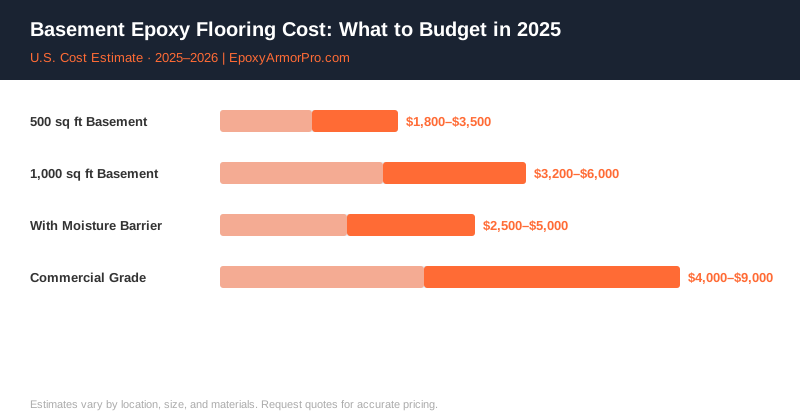
For a 500-square-foot basement in reasonable condition with moderate crack repair and a standard moisture-mitigating primer, expect $2,500–$4,500 total. According to HomeAdvisor’s 2024 data, basement floor coating projects average $2,100 nationally, but that figure skews low because many homeowners on that platform are doing partial areas or DIY-adjacent installs.
The Moisture Mitigation Spectrum
Not every basement needs the same level of moisture management. Here’s how to think about it:
Low MVT (under 3 lbs per 1,000 sq ft per 24 hours): Standard epoxy can go down with minimal modification. A penetrating moisture-resistant primer as the first coat is good practice.
Moderate MVT (3–8 lbs): Requires a dedicated moisture-mitigating epoxy primer designed to tolerate vapor drive. Adds roughly $1–$2 per square foot to the project.
High MVT (over 8 lbs) or active water intrusion: Epoxy coating alone isn’t the answer. You need to address the source — whether that’s exterior grading, gutters, a French drain, or a full interior waterproofing system — before any coating goes down.
Basement vs. Garage: Side-by-Side Cost Comparison
| Variable | Garage | Basement |
|---|---|---|
| Base coating cost | $3–$7 per sq ft | $2–$5 per sq ft |
| Moisture risk | Low to moderate | Moderate to high |
| Moisture test required? | Optional | Mandatory |
| UV resistance needed? | Yes (sunlight) | No (below grade) |
| Hot tire pickup risk? | Yes | No |
| Drainage considerations | Simple slope | Perimeter drain may be needed |
| Typical total (400 sq ft) | $1,200–$3,000 | $800–$3,500+ |
Flooring Alternatives to Consider Alongside Epoxy
Epoxy isn’t the only good option for basements. It’s worth knowing the alternatives so you can make a confident choice:
- Polyaspartic coating only — faster cure, good for finished basement spaces. Better UV stability (less relevant below grade). Higher cost. See our epoxy vs. polyaspartic comparison for full details.
- Vinyl plank flooring (LVP) — good for finished, livable basement spaces. Not appropriate over active moisture.
- Rubber tile or interlocking floor tiles — modular, allows moisture to drain underneath, easier to DIY. Less durable than epoxy for a finished look.
- Stained concrete — cheaper than epoxy but provides no protective film layer over the concrete.
For most basements being converted to a gym, workshop, utility room, or finished rec room, epoxy remains the strongest combination of durability, cleanability, and aesthetics.
What to Ask Basement Epoxy Contractors
- Will you run a moisture test before starting, and how long will it run?
- What’s your threshold for recommending moisture mitigation primer vs. standard?
- Do you address perimeter water intrusion or only surface coating?
- What happens to the warranty if moisture-related delamination occurs?
- What’s included in your crack repair — are you using polyurea or cement patch?
For more detail on crack assessment and repair methods — which are especially important in older basements — read our crack repair guide. And once your floor is installed, the maintenance guide covers how to get the maximum life out of it.
Contractor Referral Disclaimer: EpoxyArmorPro is a contractor referral and cost information service, not a licensed flooring contractor. We connect consumers with independent, licensed, and insured contractors. We do not perform any flooring work directly. Cost estimates are averages based on market data and vary by location, project size, materials, and contractor. Always verify contractor licensing and insurance before hiring. Individual quotes may differ from estimates shown.