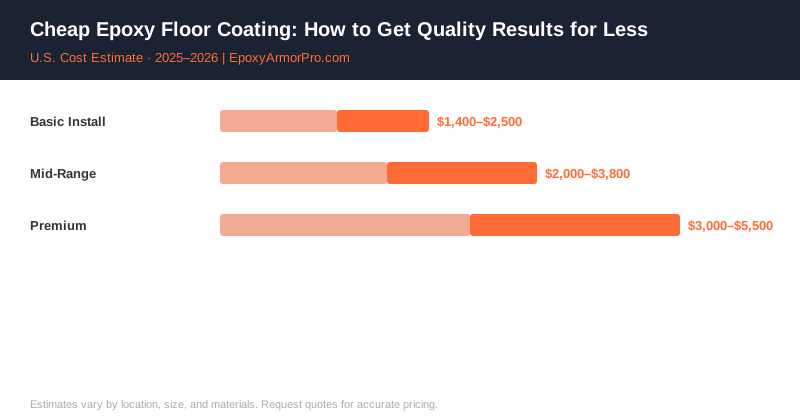
Most contractors assume homeowners asking about cheap epoxy floors just want a low number. They’re wrong. What you actually want is a floor that looks good, lasts, and doesn’t cost more than it has to. Those two goals aren’t the same thing, and getting the distinction right is the entire game.
Here’s the honest guide to reducing epoxy costs without producing a floor that fails in year two.
The Legitimate Ways to Reduce Epoxy Cost
1. Do Your Own Prep Work
Surface prep — clearing the floor, degreasing, and removing existing coatings — is real labor that contractors charge for. On a 480-square-foot garage, prep work that you can handle yourself can save $150–$400 off the total quote:
- Clear the garage completely. Every item that needs to be moved around or over is billed time. If a crew of two spends 45 minutes moving shelving, bikes, and toolboxes before they even touch the floor, that’s $60–$90 you’re paying for moving services.
- Degrease oil spots. Garage floors almost always have motor oil contamination. A $15 can of degreaser and 30 minutes of scrubbing before the contractor arrives removes a common upsell item from the estimate.
- Remove old paint or sealers yourself. If your floor has existing paint that’s bonded well (not peeling), this may not be worth attempting. But if there’s a loose, flaking latex paint layer that’s clearly failing, renting a floor grinder from Home Depot for $80/day and removing it yourself can save $200–$500 in labor.
2. Choose a Solid Color Over Chip/Flake
A solid-color epoxy system is meaningfully less expensive than a decorative chip/flake system — both in materials (no vinyl chips or broadcast supplies) and in labor (one fewer application step). The aesthetic trade-off is real: solid color shows tire marks and dirt more readily than a chip pattern. But if the floor is in a utility space or workshop where appearance isn’t the priority, solid color delivers the same durability at lower cost.
Savings vs. chip/flake: $0.50–$1.50/sq ft, or $240–$720 on a 480-square-foot garage.
3. Get 3+ Competing Quotes in the Same Week
Contractor pricing isn’t standardized. The same job in the same zip code can produce quotes ranging 40–60% apart. According to HomeAdvisor’s 2024 survey on home service pricing, homeowners who get three or more quotes save an average of 23% compared to those who accept the first quote they receive.
The key: get all quotes within the same week and let each contractor know you’re getting multiple bids. That alone creates competitive pressure without any negotiation required.
4. Time Your Project Off-Season
Most garage floor contractors in cold climates are significantly slower in November through February. That creates real opportunity for negotiation — contractors who’d fill their schedule by dropping $200–$400 off a quote are common in those months. Application requires temperatures above 50°F, so timing depends on your climate, but late fall and late winter (before spring rush) are consistently the best periods to negotiate.
5. Bundle With a Neighbor
Contractors love efficiency. If your neighbor also wants their garage floor done, a back-to-back two-garage job in the same neighborhood cuts their drive time and equipment transport cost nearly in half. Many contractors will drop $200–$500 per job to secure both. This works best if you coordinate quotes together and present as a package deal.
The System Hierarchy: What to Buy at Each Budget Level
| Budget Per Sq Ft | System You Can Get | Expected Lifespan |
|---|---|---|
| $0.50–$1.00 | DIY big-box 2-part kit, acid etch only | 1–3 years |
| $1.50–$2.50 | DIY pro-grade materials, rented grinder | 5–10 years |
| $2.50–$3.50 | Pro install, solid color, basic system | 8–15 years |
| $3.50–$5.00 | Pro chip/flake with polyaspartic topcoat | 12–20 years |
| $5.00+ | Premium decorative, metallic, or commercial | 15–25 years |
The sweet spot for most homeowners trying to minimize cost without sacrificing longevity: $2.50–$3.50/sq ft for a professionally installed solid-color system. That’s roughly $1,200–$1,680 for a standard two-car garage. You get proper diamond grinding, professional-grade 100% solids materials, and real warranty coverage — at about 30–40% less than a premium chip/flake system.
The Three Corners You Cannot Cut
1. Surface Preparation
Every dollar saved on grinding is lost three times over in premature delamination and redo costs. Don’t shorten, skip, or substitute this step. It doesn’t matter how good the product is — epoxy applied over unprepared concrete will peel. Full stop.
2. Moisture Testing
Concrete wicks moisture. Epoxy over damp concrete bubbles, blisters, and lifts. A moisture vapor emission test costs $50–$100 as an add-on. Skip it, get bad concrete, and you’re looking at a full redo. It’s the cheapest insurance in the project.
3. Product Solids Content
Buying 40%-solids material to save $30/gallon on a 480-square-foot project saves you roughly $90 in materials. That’s buying a floor that lasts 3 years instead of 15 for a $90 savings. It’s not a tradeoff anyone should take. If you’re DIYing, buy professional-grade materials from a contractor supply house. See epoxy price per gallon for the full product comparison.
Budget DIY vs. Budget Professional: Which Actually Saves More?
A true apples-to-apples comparison for a 480-square-foot garage:
| Option | Year 1 Cost | Year 5 Cost (w/ redo) | Year 10 Cost | Real Value |
|---|---|---|---|---|
| DIY big-box kit | $250 | $750 (redone once) | $1,250 (redone 3×) | Poor |
| DIY pro-grade + rented grinder | $700 | $700 (no redo) | $900 (minor touch-up) | Good |
| Pro install, solid color | $1,400 | $1,400 (no redo) | $1,400 | Best value |
| Pro chip/flake premium | $2,000 | $2,000 (no redo) | $2,000 | Great if budget allows |
The cheapest 10-year option isn’t the DIY big-box kit. It’s either the DIY professional-grade approach (if you’re genuinely handy and willing to rent the right equipment) or the pro solid-color install. The DIY vs. professional guide has the full decision framework.
Timing a Deal on Materials
One legitimate budget trick: manufacturer clearance events. Major epoxy brands run promotions 2–3 times per year, typically aligned with spring (March–April) and fall (September–October) coating seasons. Signing up for email lists from Rust-Oleum Professional, Sherwin-Williams Flooring, and regional contractor supply distributors puts you in position to catch 15–25% off material pricing — on the same professional-grade products, not clearance seconds.
Contractor Referral Disclaimer: EpoxyArmorPro is a contractor referral and cost information service, not a licensed flooring contractor. We connect consumers with independent, licensed, and insured contractors. We do not perform any flooring work directly. Cost estimates are averages based on market data and vary by location, project size, materials, and contractor. Always verify contractor licensing and insurance before hiring. Individual quotes may differ from estimates shown.