Most epoxy floors yellow. Not all of them — but if you’ve had an epoxy garage floor for a few years and it looks noticeably more amber than it did when installed, you’re not imagining things and it’s not because the contractor did bad work. It’s a chemistry problem that’s built into the molecular structure of standard epoxy resins.
The solution isn’t better epoxy. It’s a UV-stable topcoat — and understanding the difference between the chemistry that yellows and the chemistry that doesn’t.
Why Standard Epoxy Yellows: Aromatic vs. Aliphatic Chemistry
Standard two-part epoxy resins are built on aromatic chemistry — molecular structures based on benzene rings (aromatic hydrocarbons). These structures are excellent for mechanical strength, chemical resistance, and adhesion. But they have one significant weakness: they absorb UV radiation from sunlight, and that energy drives a chemical reaction called photo-oxidation that changes the color of the resin.
The change isn’t dramatic all at once. It’s gradual: clear epoxy shifts to slightly yellow, then amber, then a pronounced orange-yellow over months to years of UV exposure. The rate depends on UV intensity (Florida and Arizona see it faster than Minnesota), the amount of direct sun exposure, and whether the topcoat has any UV stabilizer package.
Aliphatic coatings — polyaspartic and polyurethane systems — are built on a different molecular framework that doesn’t absorb UV in the same way. Aliphatic coatings don’t undergo the same photo-oxidation reaction. Under the same UV conditions that turns aromatic epoxy noticeably yellow, an aliphatic topcoat holds its color for years or decades.
This is why the epoxy flooring industry uses a layered approach: aromatic epoxy as the base (for its superior mechanical properties and adhesion), with an aliphatic topcoat (polyaspartic or polyurethane) as the wear layer and UV barrier.
| Coating Chemistry | UV Resistance | Color Stability | Best Use |
|---|---|---|---|
| Standard aromatic epoxy | Poor | Will yellow in sunlight | Base coat only — must be topcoated |
| Water-based epoxy | Poor | Yellows faster than 100% solids | Not recommended for UV-exposed floors |
| Aliphatic polyurethane | Excellent | Very stable long-term | Topcoat — UV-stable and durable |
| Aliphatic polyaspartic | Excellent | Very stable long-term | Topcoat — fast cure, UV-stable |
| UV-stabilized epoxy (with additives) | Moderate | Delays yellowing, doesn’t prevent it | Better than standard, but still not UV-proof |
How Fast Does Epoxy Yellow Without a UV Topcoat?
The timeline varies, but as a rough guide:
- Florida, Arizona, California, Texas: Visible yellowing in 6–18 months without a UV-stable topcoat
- Southeast (Georgia, Carolinas, Tennessee): 1–3 years of sun exposure before noticeable yellowing
- Midwest, Mid-Atlantic, Northeast: 2–5 years, depending on how much direct sunlight enters the garage
- Garages with no direct sun exposure: May show minimal yellowing for 5+ years even without a UV topcoat
If your garage door is south-facing and open for several hours daily, you’re in the fast-yellowing category regardless of geography. Sun angle matters — a low winter sun shining directly onto a garage floor drives more UV exposure per hour than diffuse summer light bouncing around.
Polyaspartic as the UV Solution
Polyaspartic coatings — a subset of polyurea chemistry — have become the standard UV-stable topcoat in professional epoxy flooring. They’re aliphatic by default, meaning they inherently resist UV-induced yellowing. A quality polyaspartic topcoat over a standard epoxy base coat is the combination used on most professional-grade residential and commercial epoxy floors.
Polyaspartic also brings other advantages:
- Faster cure time: 2–6 hours to foot traffic vs. 12–24 hours for standard epoxy topcoats
- Higher hardness: Typically rated 70–80 Shore D vs. 60–70 for standard epoxy clear coats
- Better abrasion resistance: Important for garage floors with tire traffic
- Application temperature flexibility: Can be applied at lower temperatures than standard epoxy, useful for fall and spring installs
The tradeoff: polyaspartic has a very short pot life (the working time after mixing, typically 10–30 minutes depending on temperature). Contractors who are unfamiliar with it can make mistakes. If you’re comparing quotes, ask specifically about the contractor’s experience with polyaspartic application.
For the full cost and chemistry comparison, our epoxy vs. polyaspartic guide covers everything.
What About Flake Floors and Solid Colors?
The UV question applies differently depending on your floor system:
Solid color floors: Maximum UV exposure to the topcoat — the surface color you see is the epoxy or topcoat chemistry directly. These floors absolutely need an aliphatic topcoat if any sunlight exposure is expected.
Full-broadcast flake floors: The decorative flake chips are suspended in the topcoat, which provides some physical protection for the base coat beneath. But the topcoat itself still yellows under UV, causing an amber tint over the whole floor. Still benefits from a UV-stable polyaspartic topcoat.
Metallic epoxy floors: These are usually clear-coated with a high-gloss topcoat over a metallic pigment base. The clear topcoat is the UV-exposed layer. Without a UV-stable topcoat, the clear coat yellows and tints the metallic effect. UV-stable topcoats are essentially mandatory for metallic floors in any sun-exposed installation.
- Insist on an aliphatic polyaspartic or polyurethane clear topcoat as the final wear layer
- Ask your contractor to confirm the topcoat chemistry — “UV stable” should be in the product’s technical data sheet
- For full-sun exposure (south-facing garages, outdoor patios), consider two topcoat layers
- UV-stable topcoats don’t require re-coating to maintain UV protection — the chemistry is permanent, not a surface treatment
- Avoid water-based clear coats as topcoats in any UV-exposed application
Fixing a Yellowed Floor
If your epoxy floor has already yellowed, here’s the honest assessment: you can’t un-yellow the existing coating. Photo-oxidation is a chemical change that can’t be reversed.
Options:
Apply a UV-stable topcoat over the yellowed floor: This stops further yellowing but doesn’t remove the existing amber color. The new topcoat sits on top of the discolored surface. The floor will look cleaner and more protected going forward, but the underlying color has changed.
Grind off the top layer and recoat: More aggressive, but this removes the discolored layer and gives you a fresh surface for a proper UV-stable system. This is the right approach if the yellowing is severe or if you’re also seeing adhesion issues.
Color change: If you’re recoating anyway, consider switching to a tinted or pigmented topcoat that masks the underlying color shift. Some homeowners find that a gray tinted topcoat looks better than a yellowed clear.
For the full guide on yellowing causes and fixes, see our article on epoxy floor yellowing.
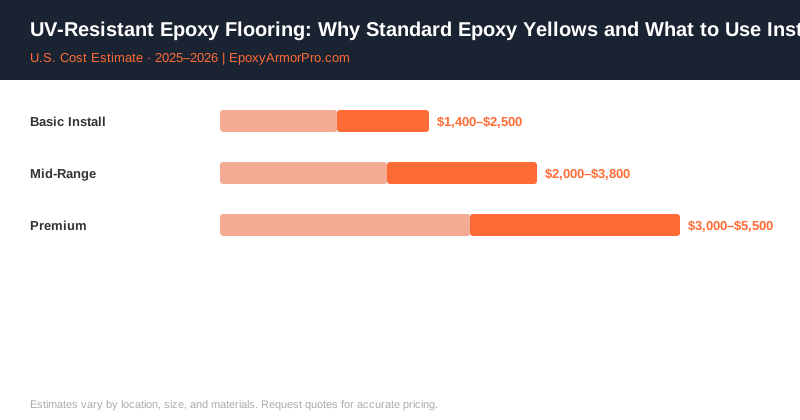
UV-Resistant Flooring Costs
The UV-stable polyaspartic topcoat adds modest cost to a total system, but it’s well worth it for any sun-exposed application.
| Service | Cost Range |
|---|---|
| Standard 2-coat epoxy system (no UV topcoat) | $1,000–$2,000 for 2-car garage |
| Adding UV-stable polyaspartic topcoat | +$200–$600 |
| Full 3-coat system with UV topcoat | $1,400–$2,800 total |
| Topcoat-only recoat of existing yellowed floor | $600–$1,200 |
| Grind + recoat for severe yellowing | $1,000–$1,800 |
For complete cost context, see the garage epoxy flooring guide.
The Takeaway
UV resistance isn’t a premium feature — it’s a basic requirement for any epoxy floor that will see sunlight. The chemistry is simple: standard epoxy yellows, aliphatic topcoats don’t. Any professional contractor doing work in a sun-exposed environment should be defaulting to an aliphatic polyaspartic clear coat. If they’re not, ask why — and if the answer isn’t convincing, get another quote.
Contractor Referral Disclaimer: EpoxyArmorPro is a contractor referral and cost information service, not a licensed flooring contractor. We connect consumers with independent, licensed, and insured contractors. We do not perform any flooring work directly. Cost estimates are averages based on market data and vary by location, project size, materials, and contractor. Always verify contractor licensing and insurance before hiring. Individual quotes may differ from estimates shown.