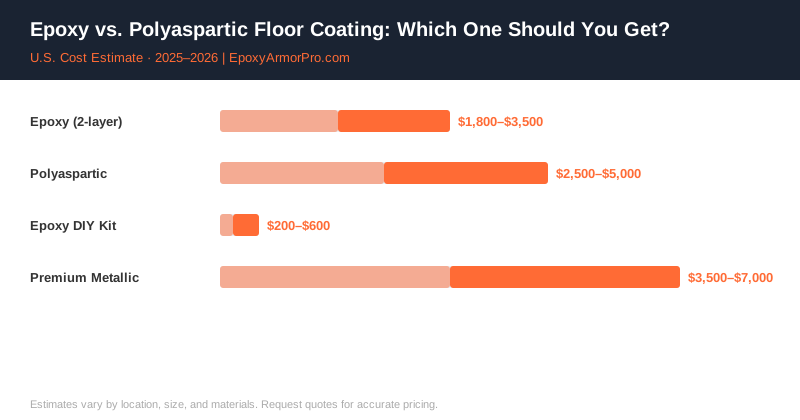
Most homeowners assume epoxy is epoxy. They see two contractors quote the same job, one calls it “epoxy,” the other calls it “polyaspartic,” and they figure it’s just different branding for the same product. It’s not. These are chemically distinct coating systems with meaningfully different performance profiles — and choosing the wrong one for your situation is an expensive mistake.
What Each Actually Is
Epoxy is a two-part system: a resin and a hardener. When mixed, they undergo a chemical reaction that produces a dense, hard film. It’s been the industry workhorse for decades. At 100% solids content, it builds a thick, durable layer that resists abrasion, chemicals, and impact.
Polyaspartic is a newer chemistry — a type of polyurea. It was developed in the 1990s and has gained serious traction in floor coating because of one key advantage: it cures extremely fast. Where standard epoxy needs 24–72 hours to cure before you can walk on it, polyaspartic is typically traffic-ready in 1–4 hours.
The Core Differences, Side by Side
| Feature | Epoxy | Polyaspartic |
|---|---|---|
| Cure time (walk-on) | 24–72 hours | 1–4 hours |
| Full cure (vehicle traffic) | 3–7 days | 24 hours |
| UV resistance | Yellows over time | Excellent, stays clear |
| Heat tolerance | ~140°F | ~200°F |
| Chemical resistance | Very good | Very good |
| Abrasion resistance | Excellent | Excellent |
| Material cost | Lower | Higher (20–40%) |
| Low-temp application | Down to 50°F | Down to 30°F |
| Recoat window | Flexible | Very short — must work fast |
The UV Yellowing Issue Is Real
If your garage gets direct sunlight through windows or an open door for significant parts of the day, standard epoxy will yellow. It’s not subtle over time — it turns a creamy amber color that makes a once-sharp grey floor look old and dingy. Polyaspartic topcoats are UV-stable and won’t discolor.
This is exactly why most professional installers now use a hybrid system: epoxy as the primer and base coat (for thickness and chemical adhesion), then polyaspartic as the topcoat (for UV resistance and fast cure). You get the structural benefits of epoxy and the surface performance of polyaspartic.
When Pure Epoxy Still Makes Sense
- Interior spaces with no direct sunlight — basements, utility rooms, commercial kitchens. No UV exposure means no yellowing risk, so paying extra for polyaspartic resistance isn’t necessary.
- Budget-constrained projects — epoxy-only systems cost roughly $3–$6 per square foot installed vs. $5–$12 for full hybrid systems.
- When a longer recoat window matters — epoxy is more forgiving for large projects because it stays workable longer. Polyaspartic sets up so fast that an inexperienced installer can get caught mid-floor.
When Polyaspartic Makes Sense
- Garages with UV exposure — any space where sunlight hits the floor directly.
- You need the floor back fast — if parking outside for three days isn’t practical, a polyaspartic or hybrid system gets you back to normal in 24 hours.
- Extreme temperature swings — polyaspartic tolerates a wider application temperature range, which matters in climates with cold springs or falls.
- Hot climates — the higher heat tolerance (200°F vs. 140°F) means hot tire pickup is much less likely on a polyaspartic topcoat.
The Cost Reality
Pure polyaspartic systems cost more — typically 20–40% more in materials than equivalent epoxy systems. The Concrete Network estimates professionally installed polyaspartic-only floors run $5–$9 per square foot, compared to $3–$6 for epoxy-only.
The hybrid system lands in the middle at $5–$12 depending on coating thickness, flake density, and regional labor rates. For most homeowners, the hybrid is the best value — you’re getting the fast cure and UV stability where it matters (the topcoat) without paying for polyaspartic chemistry throughout.
Practical Advice: What to Ask Your Contractor
Don’t just ask “Is it epoxy or polyaspartic?” — ask these instead:
- What’s the solids content of your base coat?
- Is the topcoat polyaspartic or aliphatic epoxy?
- What’s the total system thickness in mils?
- Will the topcoat yellow with UV exposure?
- What’s the return-to-vehicle time?
A contractor using quality materials will answer these without hesitation. If they dodge or go vague, that tells you something.
For a deeper look at what drives overall cost on these systems, see our epoxy garage flooring cost factors guide. And if you want to understand what good surface prep looks like before any coating goes down, start with the crack repair guide.
Contractor Referral Disclaimer: EpoxyArmorPro is a contractor referral and cost information service, not a licensed flooring contractor. We connect consumers with independent, licensed, and insured contractors. We do not perform any flooring work directly. Cost estimates are averages based on market data and vary by location, project size, materials, and contractor. Always verify contractor licensing and insurance before hiring. Individual quotes may differ from estimates shown.