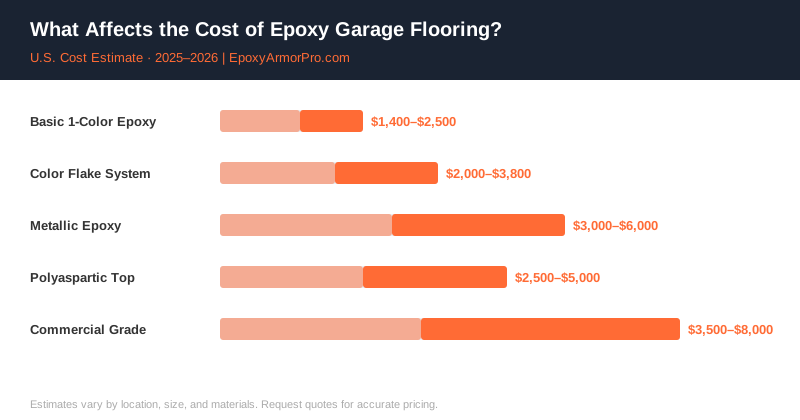
Why does one neighbor pay $1,400 for their epoxy garage floor while another pays $4,200 for roughly the same size space? Is someone getting ripped off? Not necessarily. Epoxy pricing has a lot of moving parts — and understanding each one lets you walk into contractor conversations with realistic expectations instead of sticker shock.
Factor 1: Square Footage (and Its Diminishing Returns)
Size matters, but not linearly. Contractors have a fixed mobilization cost just to show up — equipment, crew, travel. That cost gets amortized over the job. A 250-square-foot one-car garage might cost $5–$7 per square foot because setup overhead is a larger slice of the total. A 600-square-foot three-car garage might come in at $3.50–$5 per square foot for the exact same coating system.
Rough square footage guide for garages:
- 1-car garage: ~250 sq ft
- 2-car garage: ~400–500 sq ft
- 3-car garage: ~600–700 sq ft
| Garage Size | Sq Footage | Estimated Installed Cost (mid-grade) |
|---|---|---|
| 1-car | 250 sq ft | $875–$1,750 |
| 2-car | 450 sq ft | $1,350–$3,150 |
| 3-car | 650 sq ft | $1,950–$4,550 |
| Oversized/shop | 900+ sq ft | $2,700–$7,200+ |
Factor 2: Number of Coating Layers and System Thickness
A single-broadcast decorative flake system (primer + base coat + flakes + topcoat) is a different product than a multi-layer commercial-grade system with two full color coats and a double topcoat. The latter uses 2–3x more material and takes longer to install.
HomeAdvisor’s 2024 national cost data shows professionally installed epoxy systems averaging $2,600 for a two-car garage — but that average spans everything from a basic solid-color single-coat to a premium metallic or full-flake broadcast system. Material costs alone can range from $0.50/sq ft for water-based products to $4+/sq ft for high-solids commercial-grade materials.
Factor 3: Decorative Style — Solid Color vs. Flake vs. Metallic
This is one of the biggest cost variables homeowners don’t anticipate.
Solid color epoxy is the entry-level look — a single uniform color, usually grey or tan. It’s functional, durable, and the least expensive to install. No extra material or time for decorative elements.
Color flake systems (also called chip or broadcast flake) add vinyl chips broadcast into the wet base coat before the topcoat goes down. They hide tire marks and imperfections better than solid color and have a lot of aesthetic variety. They add $0.50–$1.50 per square foot to material cost depending on coverage density.
Metallic epoxy uses pearlescent metallic pigments to create a swirled, three-dimensional look. It requires a specialized application technique — working wet-on-wet to blend the pigments — and typically adds $2–$5 per square foot over a standard solid system.
| Decorative Style | Added Cost Per Sq Ft | Best For |
|---|---|---|
| Solid color | $0 (base) | Utility garages, clean modern look |
| Light flake broadcast | +$0.50–$1.00 | Most residential garages |
| Full flake broadcast | +$1.00–$1.50 | High-traffic, showroom look |
| Metallic swirl | +$2.00–$5.00 | Premium aesthetic, custom finish |
Factor 4: Surface Prep Condition
This is the one that can surprise you most at quote time. If your garage floor is in good shape — no major cracks, no significant oil contamination, no previous coatings to strip — prep is relatively quick. The grinding crew gets in and out.
If your floor has:
- Heavy oil staining (needs multiple degreasing rounds and may need grinding deeper)
- Previous failed epoxy or paint to remove (mechanical removal is slow)
- Multiple structural cracks needing polyurea injection and grinding
- Significant surface pitting or spalling to fill
…you could add $0.50–$2.00 per square foot to the prep cost alone. The concrete has to be right before any coating touches it — there’s no shortcut, and honest contractors won’t pretend otherwise. For a detailed breakdown of what crack repair involves, see our crack repair guide.
Factor 5: Geographic Region and Labor Markets
Labor rates in the US aren’t uniform. The same 2-car garage epoxy job that costs $1,800 in a mid-tier Midwest market could easily run $3,200 in the San Francisco Bay Area, New York suburbs, or coastal New England — not because the coating is different, but because crew wages, vehicle costs, and business overhead are higher.
The Concrete Network’s regional pricing data shows labor as 40–60% of total project cost on most residential epoxy jobs, which means geographic variation has an outsized impact on your total.
Rough regional multipliers compared to national average:
- Southeast / Midwest: 0.85–1.0x national average
- Southwest / Mountain West: 0.90–1.05x
- Northeast / Mid-Atlantic: 1.15–1.40x
- Pacific Coast / Hawaii: 1.25–1.60x
Factor 6: Topcoat Chemistry — Epoxy vs. Polyaspartic
Adding a polyaspartic topcoat over an epoxy base adds $1–$3 per square foot in material costs, but it meaningfully extends the floor’s lifespan and eliminates UV yellowing for garage spaces with sunlight exposure. It also enables same-day return to service, which matters to some homeowners. Our full epoxy vs. polyaspartic comparison breaks down when it’s worth the upgrade.
Getting Accurate Quotes: What to Provide
To get apples-to-apples quotes, give each contractor the same information:
- Exact square footage (measure it yourself — don’t estimate)
- Current floor condition (cracks? oil stains? previous coating?)
- Desired aesthetic (solid, flake, metallic)
- Timeline requirements (can you be without the garage for 3+ days?)
Ask each contractor to quote the same system — or if they quote something different, ask them to explain why. The quote with the lowest number isn’t always the best value; the one that includes proper prep and appropriate material thickness usually is.
Contractor Referral Disclaimer: EpoxyArmorPro is a contractor referral and cost information service, not a licensed flooring contractor. We connect consumers with independent, licensed, and insured contractors. We do not perform any flooring work directly. Cost estimates are averages based on market data and vary by location, project size, materials, and contractor. Always verify contractor licensing and insurance before hiring. Individual quotes may differ from estimates shown.